|
|
 |

SUBSCRIBE TO OUR
YOUTUBE CHANNEL 
|
|
|
 |
|
|
|
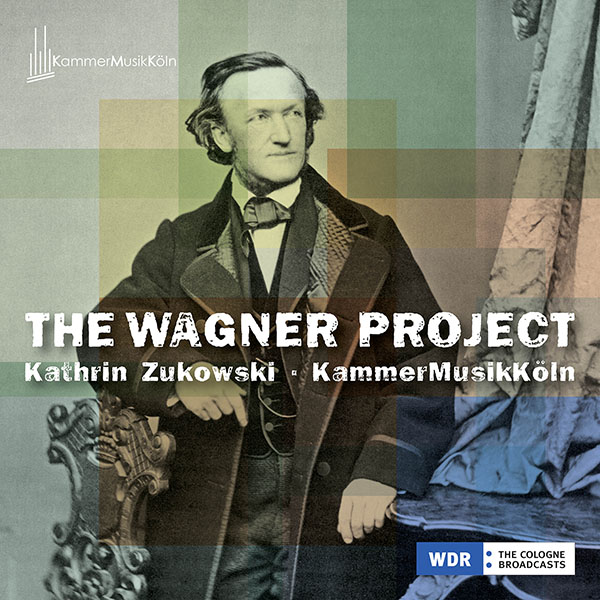
KATHRIN
ZUKOWSKI,
soprano
·
KammerMusikKöln
THE
WAGNER
PROJECT
The
recording
of this
CD on
the
occasion
of the
“10+1”
anniversary
concert
of the
KammerMusikKöln
ensemble
stood
entirely
under
the
motto
of
Richard
Wagner,
reflecting
our
desire
to put
on
several
of his
works
in
arrangements
for
chamber
music
ensemble.
Thus,
with
this
Wagner
Project,
we
present
several
rarities
along
with a
world
première.
For
one, we
are
thrilled
to
introduce
Engelbert
Humperdinck’s
almost
entirely
unknown
arrangement
of the
prelude
to
Tristan
und
Isolde.
This
recording
also
features
a true
world
première:
Wagner’s
extremely
rarely
performed
French
Songs
in an
arrangement
we have
commissioned
from
Simone
Fontanelli,
coupled
with
the
second
public
performance
of
Fontanelli’s
arrangement
of
Wagner’s
Wesendonck-Lieder,
a
further
commission
by
KammerMusikKöln.
We also
have
the
particular
pleasure
of
presenting
Wagner’s
Siegfried
Idyll
in the
composer’s
own
chamber
music
arrangement,
a
particularly
gratifying
piece
for
small
ensemble.
We
consider
ourselves
particularly
lucky
to
celebrate
KammerMusikKöln’s
anniversary
with
the
largest
project
we have
ever
put
together,
featuring
fifteen
instrumentalists
and a
vocal
soloist.
And we
are
fortunate
to
count
on the
collaboration
of
soprano
Kathrin
Zukowski,
a
member
of the
regular
ensemble
of
soloists
at
Cologne
Opera.
(Monika
Hermans-Krüger)
Release
date 19 April 2024 | |
|
|
|
|
|
|
|
|
|
|
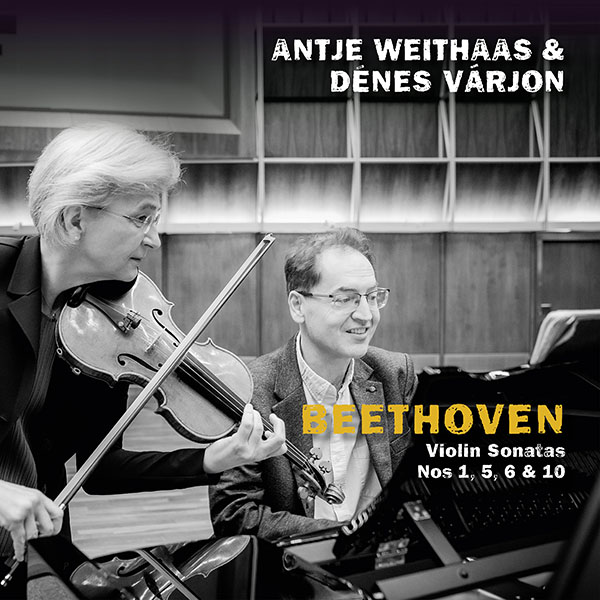
ANTJE
WEITHAAS,
violin
& DÉNES
VÁRJON,
piano
BEETHOVEN
·
Violin
Sonatas
Nos 1,
5, 6 &
10 Vol.
III (2
CDs)
The
BEETHOVEN
WISPERER
The
missing
final
Four…with
all the
contrasts!!!
all
complete
now!!!
“Volume
I with
sonatas
2, 4,
and 9
was
reviewed
by Mr
Magil
(S/O
2023),
who
called
them
some of
the
very
finest
readings
of
these
works;
and we
can
extend
these
same
words
to
Volume
II”
(American
Record
Guide
March/April
2024)
“Just
once in
my
lifetime,
I
wanted
to
record
Beethoven’s
ten
violin
sonatas
as a
cycle!”
For
violinist
Antje
Weithaas,
this
was a
long-held
wish.
”This
music
exudes
profound
humanity,
a trait
I find
in each
of the
violin
sonatas.
And
every
piece
by
Beethoven
I know
contains
a
moment
of
deeply
moving
emotion.”
Antje
Weithaas
embarked
on her
journey
through
several
creative
periods
of
Beethoven’s
output
in the
company
of one
of the
most
versatile,
sensitive
pianists
of our
time:
the
Hungarian
Dénes
Várjon.
..
(Excerpt
from
the
booklet
notes
by
Elisabeth
Richter)
Release
date 28
March
2024 | |
|
|
|
|
|
|
|
|
|
|
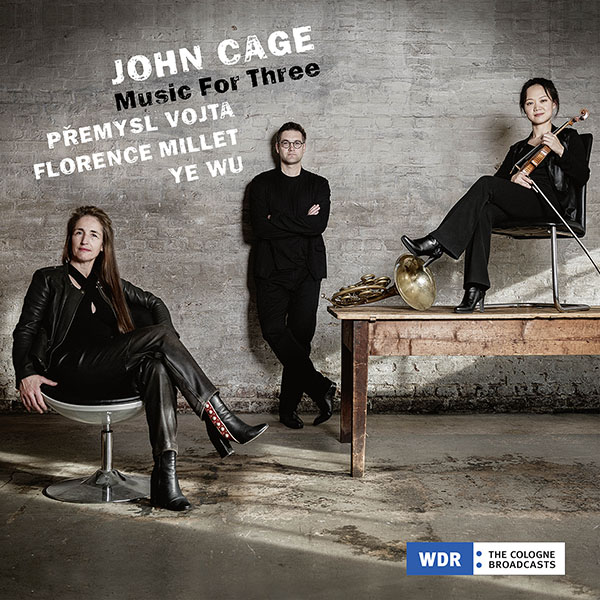
PŘEMYSL
VOJTA,
horn &
YE WU,
violin &
FLORENCE
MILLET,
piano
JOHN
CAGE ·
Music
for
Three
John
Cage
(1912-1992)
holds
his own
special
place
amidst
this
stylistic
pluralism.
Although
Cage
did not
specifically
write a
trio
for
horn,
violin,
and
piano,
his
work
Music
For
(1984)
can be
easily
fleshed
out in
this
instrumental
lineup.
...
YE
WU:
…...Cage
was
truly
trying
out a
lot of
different
things.
I find
that
horn,
piano,
and
violin,
with
their
differing
timbres,
offer
the
perfect
lineup
for
this
music……..We’re
also
dealing
with a
kind of
freedom
when
such
moments
emerge
quasi-spontaneously
from
our
playing
without
having
to plan
them
together
beforehand.
”
Přemysl
Vojta:
…...John
Cage’s
Music
For
Three
allows
us such
freedoms
and
possibilities.
That is
why
this
music
emerges
so
fresh
and
turns
out
differently
every
time it
is
performed
on
stage
or in
the
recording
studio.
For me,
it’s
been a
thrilling
experience,
this
way of
dealing
with
time
and the
position
we
occupy
within
it –
thanks
to a
score
that
always
allows
us to
find
that
standpoint
and
interpret
it
anew.….
Florence
Millet:
We’re
allowed
to set
in for
the
first
time
whenever
we want
within
the
first
35
seconds.
That is
already
the
first
freedom
this
piece
allows
us. As
soon as
we hear
one of
our
colleague’s
notes,
or the
breath
inhale
that
precedes
it, we
can
react
to what
is
going
on.…
(Excerpts
from
the
booklets
notes
by
Johannes
Zink)
Release
date 26 January
2024
| |
|
|
|
|
|
|
|
|
|
|
SANDRINE
CANTOREGGI,
violin
&
SHEILA
ARNOLD,
piano
GUSTAV
RIVINIUS,
cello ·
MICHAEL
FAUST,
flute
MEL
BONIS ·
Entre
Soir et
Matin
(2 CDs)
WATCH
ON
| |
|
|
|
|
|
|
|
|
|
|
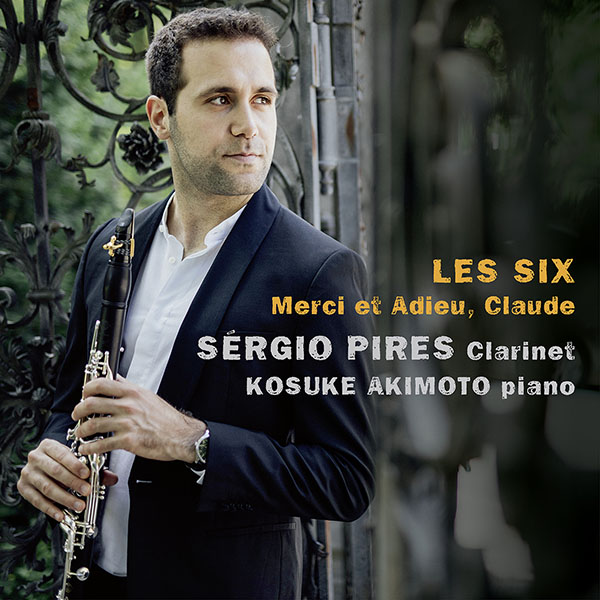
SÉRGIO
PIRES,
Clarinet
&
KOSUKE
AKIMOTO, Piano
LES SIX · Merci et Adieu, Claude
Sérgio
Pires
is the
new
Principal
Clarinet
of the
London
Symphony
Orchestra
We
are
very
delighted
to
inform
you
that
Sérgio
Pires
has
become
the
Principal
Clarinet
of the
London
Symphony
Orchestra
(LSO)!
According
the the
orchestra's
website,
Sérgio
Fernandes
Pires
is a
winner
of more
than a
dozen
prizes
at
international
competitions.
On
the
occasion
of this
announcement,
the LSO
also
has
published
an
interview
with
Sérgio
Pires.
You'll
get
access
to both
the
announcement
and the
interview
by
using
the
following
link:
click
For
more
information
about
Sérgio
please
visit
the
artist's
and
the
agency's
website
as
well.
| |
|
|
|
|
|
|
|
|
|
|
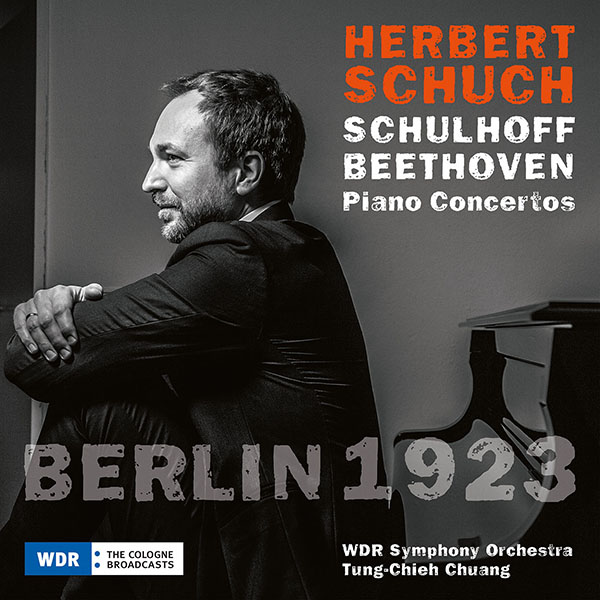
HERBERT
SCHUCH,
piano
WDR
SYMPHONY
ORCHESTRA
,TUNG-CHIEH
CHUANG,
conductor
Beethoven
und
Schulhoff
in
Dialogue
Schuch:
“Indeed,
it’s
quite
exciting
to look
at what
was
going
on
exactly
100
years
ago –
perhaps
because
1923
doesn’t
seem
all
that
distant
to us.
Certain
events
and
circumstances
seem to
mirror
one
another
a
century
apart.
From a
musical
point
of
view,
Erwin
Schulhoff’s
piano
concerto
is a
truly
interesting
work
that
has not
attained
the
recognition
it
deserves.
. …
In
terms
of
style,
the
piano
concerto,
composed
between
11 June
and 10
July
1923,
is one
of
those
works
where
Schulhoff
radically
deals
with
the
dance
types
of
jazz,
which
had
crossed
the
Atlanticand
spread
out
from
Paris
until
taking
all of
Europe
by
storm…
.
No
other
pair of
composers
could
be more
different
– on
paper –
than
these
two.
Schulhoff
always
took a
decisive
stance
against
traditionalism.
Indeed,
he may
have
been
something
of an
iconoclast,
but he
was
also a
talented
and
well-trained
pianist
– a
pianist
who
wanted
to earn
success
in that
very
role.
…….“
(Excerpts
from
the
booklets
notes)
Release
date 10
November
2023 | |
|
|
|
|
|
|
|
|
|
|
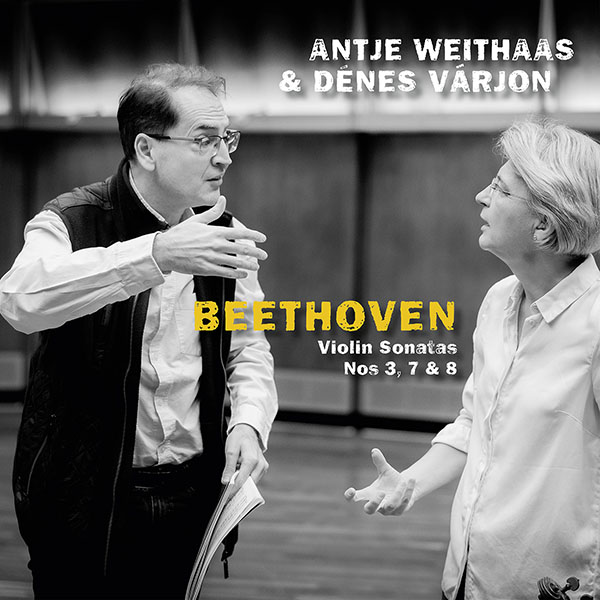
ANTJE
WEITHAAS,
violin
& DÉNES
VÁRJON,
piano
The
middle
three…
“…..Weithaas
and
Várjon
have a
great
deal to
say and
are not
afraid
to say
it, but
their
focus
of
interest
is
always
and
emphatically
Beethoven
– not
themselves.”
(MusicWeb
Intern’l
July
23)
Both
highly
in
demand
on a
worldwide
scale
as
unique,
exceptional
chamber
music
performers:
Antje
Weithaas
and
Dénes
Várjon
each
ideally
combine
the
highest
degree
of
enthusiasm
and
precision...
“In
Antje
Weithaas’s
und
Dénes
Várjon’s
complete
edition
of
these
sonatas
in
three
volumes,
each
individual
release
is
designed
to
illustrate
those
stages
of
artistic
development
(instead
of
featuring
the
works
in
strict
chronological
order).
From
the
onset,
Beethoven
ascribed
utter
importance
to the
principle
of
dialogue
between
the two
instruments,
as we
can
infer
from a
letter
he
wrote
to
Artaria
on 19
June
1793…..
The
current
Vol. 2
release
contrasts
the
third
sonata
(in E
Flat
Major)
of the
early
Op. 12
group
with
the
second
and
third
sonatas
of Op.
30.
....."
(Excerpt
from
the
booklet
notes
by
Elisabeth
Richter)
Release
date 27
October
2023
| |
|
|
|
|
|
|
|
|
|
|
SANDRINE
CANTOREGGI,
violin
&
SHEILA
ARNOLD,
piano
GUSTAV
RIVINIUS,
cello ·
MICHAEL
FAUST,
flute
MEL
BONIS ·
Entre
Soir et
Matin
(2 CDs)
A late
discovery
of a
most
important
female
composer
from
France
for the
musical
world.
Mélanie
Hélène
Bonis,
known
by her
artistic
pseudonym
Mel
Bonis
(21
January
1858 –
18
March
1937),
was a
Romantic
composer
in the
late
years
of the
19 c.
and
first
half of
the
20c..
To
everybodies
surprise
Mel
Bonis
succeeded
in the
Paris
society
and was
well
regarded
by her
male
composer
fellows
Camille
Saint-Saëns,
her
fellow
student
Claude
Debussy
and
others.
Some of
her
works
have
been
officially
published.
Sheila
Arnold
and
Sandrine
Cantoreggi
initiated
this
album
and
discovered
not
only a
piece -
Soir -
never
played
or was
registered
before,
but
kept
her
choice
also
mainly
to
their
own
instruments
Violin
and
Fortepiano
(on a
Bluethner
Fortepiano
1871).
Two
Trios
(one
with
Cello,
the
other
with
flute)
embrace
the
program
of
small
short
pieces
for
Violin
and
Fortepiano,
highlighting
in
particular
the
larger
Violin
Sonata,
Op.
112.
“Music
speaks
to me
about
what I
want,
but
then it
withholds
it. It
kindles
my
desires
and
makes
me feel
the
futility
of
everything
on this
earth.
Oh!
Words
are so
empty
when
they
try to
express
all of
these
things!
…..”
(Mel
Bonis)
Release
date 20
October
2023
| |
|
|
|
|
|
|
|
|
|
|
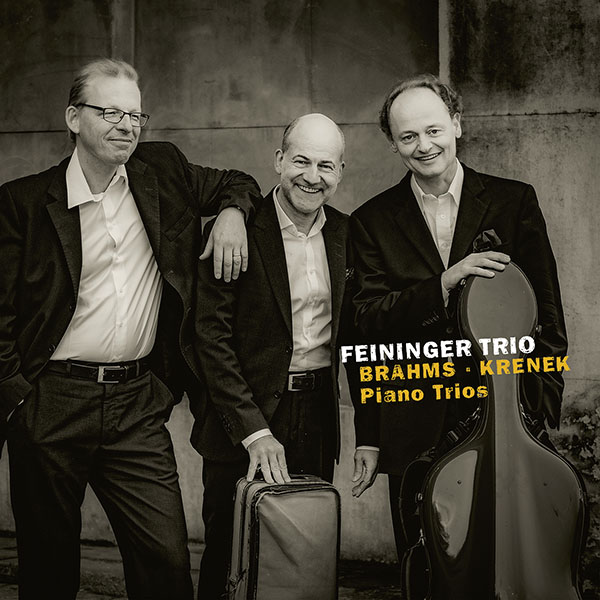
FEININGER
TRIO
BRAHMS
·
KRENEK
· Piano
Trios
Kreneks
relation
to
Brahms
Volker Michael in conversation
with David Riniker
Brahms,
Piano Trio No. 1 B Major, Op.
8(1889)
….By
combining Brahms’s piano trios
with works in the same genre by
his younger Viennese successors,
we aim to open up new perspectives
on Brahms’s output. The two works
featured on the current release,
Brahms’s Trio Op. 8 and Ernst
Krenek’s Trio-Fantasia Op. 63, are
essentially different in one
particular way.
In Brahms, the
two string instruments often play
together, either in octaves or in
sixths, and the two are
particularly closely intertwined
in the B Major Trio (Op. 8).
…….
Ernst Krenek, Trio Fantasy Op. 63
…..The
instrumental parts are not as
closely interwoven in this piece
as in Brahms’s trio. But Krenek’s
Op. 63 seems to depict an entire
life story. It starts very softly;
then, a series of events take
place, just as in real life;
toward the end, the music seems to
vanish into the heavens. We come,
and we go.
That expressive
“life curve” is profoundly moving
and provides unity. The work thus
follows a form akin to an arc: at
the end, we return to where we
started, but not before having
experienced utter transformation
in the course of the piece…….
Release
date 13
Oktober
2023
| |
|
|
|
|
|
|
|
|
|
|
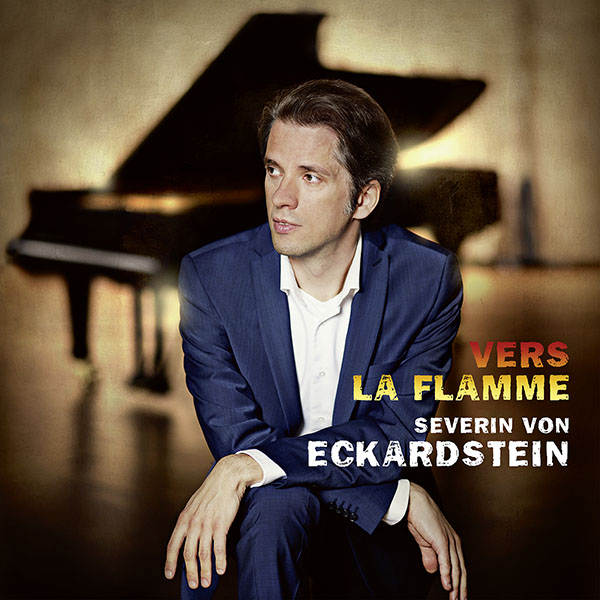
SEVERIN
VON
ECKARDSTEIN,
piano
VERS LA
FLAMME
"The
starting
point
was
Beethoven's
Sonata
op.
111,
but
this
little
piece
by
Scriabin
exemplifies
an
idea,
and the
title
is
ideal
for the
whole
CD.
The
idea is
a
journey
from
the
earthly
to the
light,
it is
about
the
question
of how
life
and
death
are
connected.
Now you
can say
that it
is
generally
a
function
of
music
that it
catapults
you
into a
new
level
of
consciousness.
But
I think
the
four
works
on this
CD do
that in
a
special
way,
they
radiate
a
tremendous
power.
They
reflect
different
personal
worlds,
were
written
at
different
times
and
spring
from
different
genres
and
sound
ideas,
yet
they
all
have a
similar
function.
Strauss
is
about a
terminally
ill
person
who
suffers,
but at
the end
of his
life
ascends
to new
spheres
and
finds
redemption.
Beethoven
is also
initially
about
something
threatening,
earthly,
but he
looks
at it
more
philosophically.
Beethoven
does
not
reveal
much of
himself
directly,
everything
is
subject
to a
strict,
architectural
form,
and
that is
why his
music
seems
to be
carved
in
stone.
But
in his
last
piano
sonata,
he
crosses
a
boundary,
one
senses
the
jagged
world
he is
divining,
here he
has
finally
expanded
the
form so
much
that he
can
ascend
to new
spheres.
.."
(Excerpt
from
the
booklet
Interview
with S.
Von
Eckardstein)
Release
date 06
Oktober
2023 | |
|
|
|
|
|
|
|
|
|
|
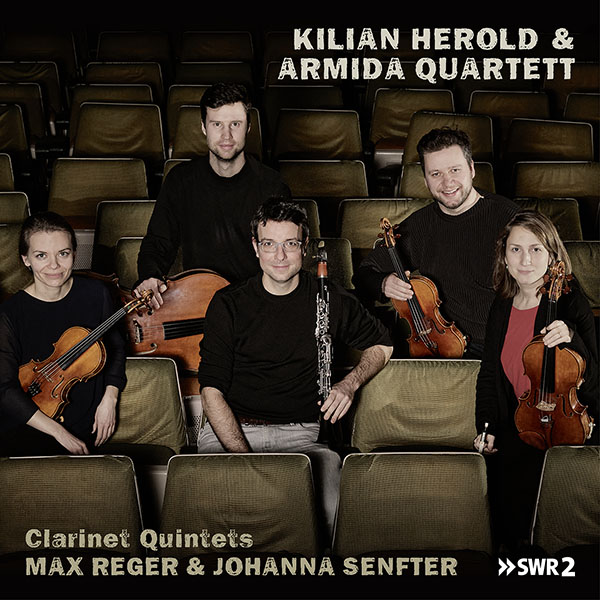
KILIAN
HEROLD,
clarinet
&
ARMIDA
QUARTETT
MAX
REGER &
JOHANNA
SENFTER
·
Clarinet
Quintets
Teacher
and
Pupil
In March of
1908, 27-year-old Johanna Senfter
went “on a pilgrimage” to visit
Max Reger in Leipzig. Having
studied piano and violin at the
Hoch Conservatory in Frankfurt am
Main, she now wanted to learn
composition.
Reger, only six
years her elder, had been in
charge of a masterclass for
musical composition at Leipzig
Royal Conservatory for only a
year. Johanna Senfter started by
taking private lessons from him. …
Moreover, for
clarinetist Kilian Herold, this
recording fulfills a
long-cherished dream.
“Clarinetists love Reger’s
Quintet. It’s a particularly
beautiful piece”, he adds. “Reger
places himself in direct
succession to Mozart and Brahms:
the Quintet is densely woven, but
also utterly transparent – a work
bathed in light, full of color,
relaxed and released from all
anxiety.”
As far as Kilian
Herold is concerned, Johanna
Senfter’s quintet serves as a
thoroughly fitting counterpart to
Reger. It is “likewise gorgeous
music, and the listener can tell
that it comes in a line of descent
from Reger.”
Johanna
Senfter felt that way herself
after Reger’s death: “With all my
heartfelt gratitude and
admiration, he will remain in my
memory. In any case, all the
beauty and goodness I received
from him will continue to work in
me.”
(Excerpt from the
booklet liner notes by Almut
Ochsmann)
DIGITAL
Release
22
September
2023
/
Release
date CD
6
November
2023
| |
|
|
|
|
|
|
|
|
|
|
LAURA
LOOTENS,
guitar
ALBÉNIZ
DEBUT
CD
Who can
avoid
thinking
of
flamenco,
bolero,
paso
doble,
and
guitars
when
they
hear
the
term
“Spanish
music”?
Born in
1860,
Spanish
composer
Isaac
Albéniz
was
mainly
a
pianist
and
wrote
primarily
for the
piano.
More
than
any
other
musician,
he
succeeded
in
incorporating
the
Spanish
guitar
idiom
and
folklore
into
his
style.
Thus,
for
instance,
his
works
contain
allusions
to
rasgueado,
a
guitar
technique
that
strums
all six
strings
percussively
in
rapid
succession,
as we
often
hear in
flamenco.
Thus it
is no
wonder
that
many of
Albéniz’s
piano
works
have
also
been
performed
on the
guitar:
particularly
Asturias
(from
the
Suite
Española),
a piece
that
has
become
a
staple
in
practically
every
guitarist’s
repertoire.
But
things
are
different
when we
come to
Albéniz’s
Iberia,
a suite
of
piano
pieces
so
complex
that
few
solo
guitarists
have
ever
attempted
to
transcribe
and
perform
them .
(although
a few
guitar
ensembles
have
managed
to
accomplish
the
feat).
Once I
fell in
love
with
guitar
playing,
I could
not
avoid
becoming
familiar
with
the
music
of
Spain,
which
drew me
immediately
under
its
spell,
thanks
to its
fiery
character,
grace,
and
astoundingly
gorgeous
melodies
coupled
with
vibrant
rhythms.
I
was
particularly
fascinated
by
Isaac
Albéniz’s
music,
which
is why
I
desired
to
devote
my
first
CD to
him,
with my
own
arrangements
of his
music.
In
these
transcriptions,
I have
endeavored
to stay
as
close
to the
original
as
possible
in
order
to
retain
the
original
pieces’
complexity.
Release
date
15
September
2023 | |

|
|
|
|
|
|
|
|
|
|
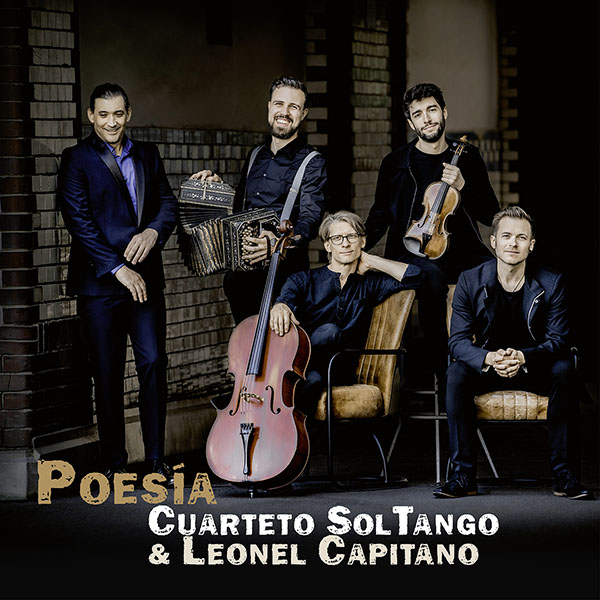
CUARTETO
SOLTANGO
&
LEONEL
CAPITANO,
voice
POESÍA
A dream
comes
true,
CUARTETO
SOLTANGO
negotiated
for a
long
time
with
the
star
Tango
singer
LEONEL
CAPITANO
until
he came
to
Munich
for the
production
- a
co-production
with
Bayerischer
Rundfunk.
Arranger
and
pianist
Martin
Klett
and
Leonel
Capitano
have
put
together
16
tangos
in
different
styles
of
famous
Tango
composers.
There
are
famous
styles
and
their
founders:
Aníbal
Troilo,
Osvaldo
Puglieses,
Horacio
Salgán,
Oswaldo
Tarrantino.
Elías
Randal,
Virgilio
Exposíto,
Acho
Manzi,
Sebastián
Piana
etc.
provide
the
music.
The
lyricists
are
also
genuine
South
Americans
and
have
written
popular,
sometimes
very
human
lyrics,
which
also
repeatedly
emphasise
the
social
aspects.
The
intoxicating
sound
of
these
pieces
of
music,
two of
them
instrumental,
makes
the
rhythm
go
straight
to your
feet, a
feast
for the
ears of
the
highest
order.
Release
date
18
August
2023 | |
|
|
|
|
|
|
|
|
|
|
DEUTSCHE GRAMMOPHON and
CAvi-music announce
strategic
partnership across
label & catalogue
Yellow Label has partnered with
CAvi-music’s rich catalogue of
bespoke music titles
and albums
featuring some of the finest
established and young artists
CAvi-music founder, record
industry veteran Dr Andreas von
Imhoff,
to retain strong
connection to the label ...
Download here the
press release (PDF)
| |

|
|
|
|
|
|
|
|
|
|
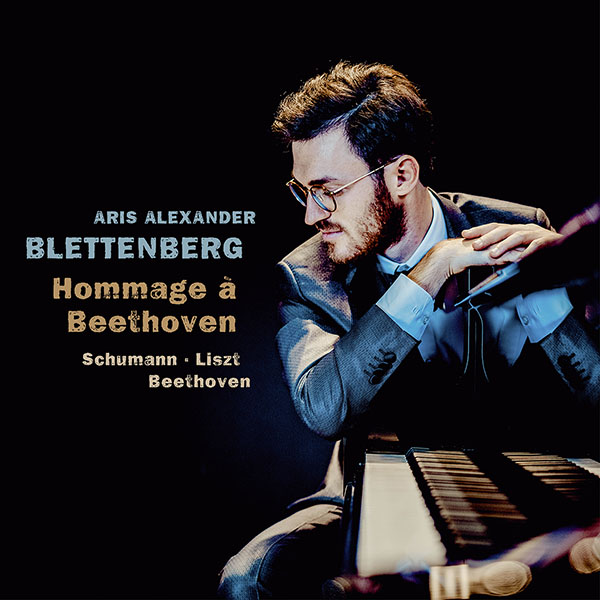
ARIS
ALEXANDER
BLETTENBERG,
piano
Hommage
à
Beethoven
·
SCHUMANN
· LISZT
·
BEETHOVEN
DEBUT
CD
Per
aspera
ad
astra
: a
musical
journey
from
darkness
to
light
The
programme
on this
CD
begins
and
ends
with
transcriptions
of
works
by
Beethoven.
The
first
piece
is the
Allegretto
(2nd
movement)
from
Beethoven’s
7th
Symphony
in the
arrangement
by
Franz
Liszt,
and the
programme
ends
with a
solo
piano
version
of
Beethoven’s
song An
die
Hoffnung,
created
especially
for
this
CD. The
two
pieces
form a
framework
of
sonorities
and
emotions
that
set the
basic
mood
for
this
musical
journey.
..
On the
one
hand,
there
is a
somber
mood
that
runs
through
the
entire
programme:
we find
it in
the
Allegretto’s
passages
in
minor,
in the
Schumann
variations,
in the
third
movement
of the
Beethoven
sonata,
and in
the
recitativo-like
passages
of An
die
Hoffnung.
These
are
complemented
by
episodes
of
light:
the
A-Major
sections
of the
Allegretto,
the
first,
second,
and
fourth
movements
of the
sonata,
and,
ultimately,
the
hopeful,
optimistic
sonorities
we find
in the
song
transcription
with
the
final
cry:
“O,
Hope!”
(Aris
Alexander
Blettenberg)
Release
date
15 May
2023 | |
|
|
|
|
|
|
|
|
|
|
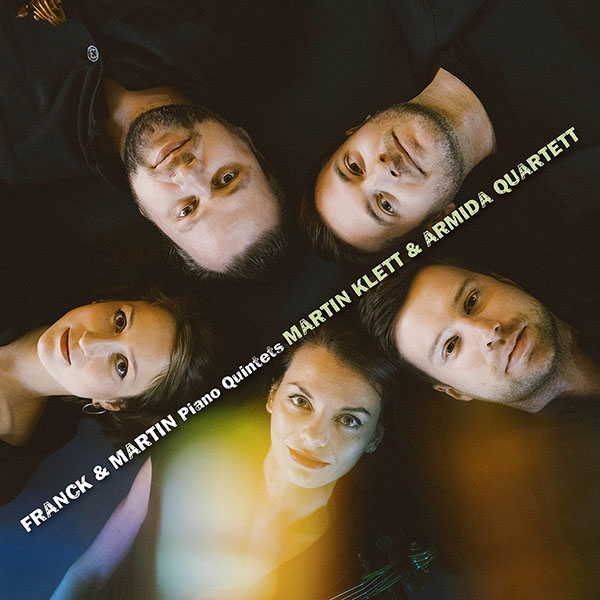
MARTIN
KLETT,
piano &
ARMIDA
QUARTETT
FRANCK
&
MARTIN
· Piano
Quintets
Late Romantic Piano
Quintets
“…
We only have
two hands, and our ten fingers are
not capable of exploiting all the
possibilities”: that is how
composer Frank Martin (1890-1974)
once described the inadequacies of
the keyboard.
However,
pianist Martin Klett and the
members of the Armida Quartet view
things somewhat differently.
Similarly to the string quartet as
a whole ensemble, the piano forms
“a perfect unit in itself”, Klett
affirms.
According to
Klett, the piano quintet is ”the
perfect line-up in chamber music”,
since “the two components have a
wide spectrum of sonorities at
their disposal, enabling them to
bring out all the timbre qualities
we know from chamber as well as
orchestral music, from the most
intimate sonorities imaginable to
the dense amassment of sound we
encounter in a symphony!”
(Excerpts from the liner
notes)
Release
date 24
April
2023 | |
|
|
|
|
|
|
|
|
|
|
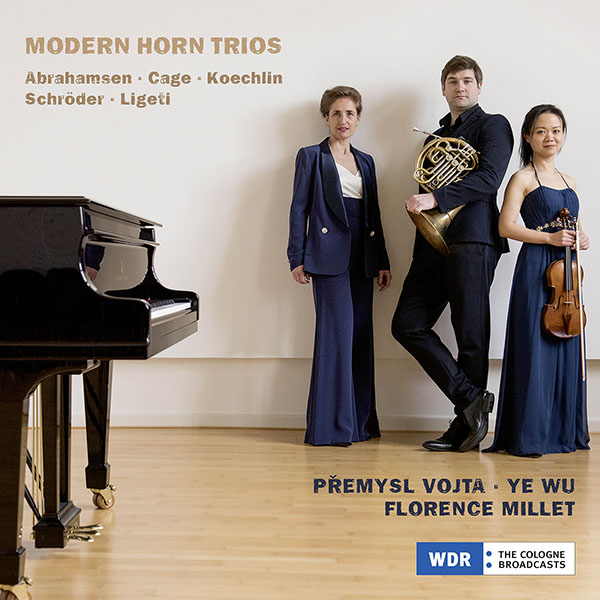
PŘEMYSL
VOJTA ,
horn ·
YE WU,
violin
·
FLORENCE
MILLET,
piano
MODERN
HORN
TRIOS
Modern
Horn Trios
"Danish
composer
Hans
Abrahamsen
wrote
his
Seks
Stykker
for
horn,
violin,
and
piano
in 1984
on the
occasion
of a
National
Radio
concert
featuring
the
Danish
première
of
György
Ligeti’s
Horn
Trio. …
John
Cage
opens
up a
new
perspective
on the
subject
of the
horn
trio.
Cage’s
Music
for
Three
embodies
one of
the
possibilities
of
performing
his
“Music
for,” a
collection
of 17
parts
that
can be
assembled
in any
possible
combination:
each
combination
is a
fully
valid
version
of the
“work”…….
Musical
quality
was the
ensemble’s
principal
criterion
in
selecting
repertoire
for
this
CD, and
they
found a
wonderful
exemplar
in a
work by
French
composer
Charles
Koechlin.
…
After
intense
research
and
preliminary
tryouts,
the
ensemble
also
chose
to
include
the
Second
Trio
for
Horn,
Violin
and
Piano
op. 40
by
former
Cologne
Conservatory
professor
Hermann
Schroeder.
..."
(Quotations
from
the
booklet
liner
notes
by
Johannes
Zink)
Release
date 10.
March
2023 | |
|
|
|
|
|
|
|
|
|
|
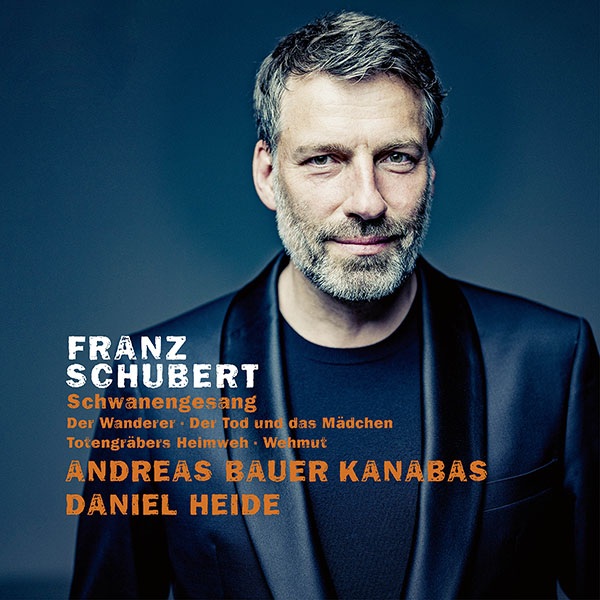
ANDREAS
BAUER
KANABAS,
bass &
DANIEL
HEIDE,
piano
FRANZ
SCHUBERT
Schwanengesang
Reflective
and
happy
coincidence
"I find
it
truly
liberating
to be
able to
deploy
my
voice
in an
unstrained
manner:
this is
a boon
for the
singer
and the
audience
alike.
Thus,
in the
case of
certain
songs,
we have
chosen
keys
that
differ
from
the
ones
featured
in the
usual
editions
– and
we find
we have
good
reason
to do
so.
A
truly
relaxed
voice
achieves
ideally
beautiful
radiance.
The
usual
transpositions
we find
in
printed
editions
are
rather
arbitrarily
chosen,
and
inconsistent
within
the
cycle.
During
the
health
crisis,
we
became
particularly
aware
that
all
moments
of
happiness
are
just as
much a
treasure
as they
are
fleeting
and
fragile.
The
Lieder
contained
in
Schwanengesang
address
those
very
themes.
These
are the
last
songs
Franz
Schubert
wrote
before
his
death:
in
Vienna,
in
1829,
his
publisher
Tobias
Haslinger
gathered
them
from
the
composer’s
last
papers
to form
a
posthumous
collection..."
(Excerpt
from
the
booklet
note by
Andreas
Bauer
Kanabas)
Release
date 17
February
2023 | |
|
|
|
|
|
|
|
|
|
|
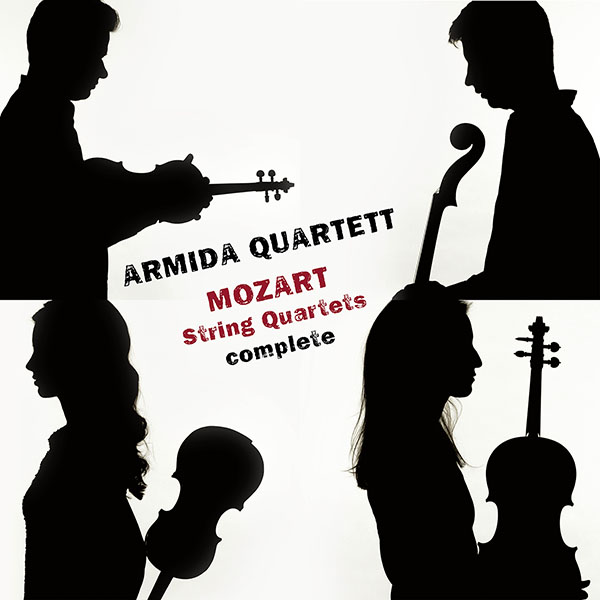
ARMIDA
QUARTET
MOZART
· String Quartets complete (7 CD)
'
Mozart’s
string
quartet
output
can be
easily
divided
into
two
groups:
on the
one
hand,
the
thirteen
early
works
written
by a
teenager,
and the
ten
“celebrated”
Viennese
masterpieces
on the
other.
Not
a
single
movement
in this
impressive
oeuvre
could
ever be
described
as
insignificant;
on the
contrary.
Mozart’s
early
string
quartets
are
brimming
with
endless
variety
of
imagination,
with
the
pleasure
of
experimenting,
and the
sheer
joy of
music-making;
meanwhile,
each
movement
of the
“ten
celebrated
quartets”
(Alfred
Einstein)
is a
unique
masterpiece
in its
own
right....'
(from
the
booklet
notes
by Dr.
Wolf-Dieter
Seiffert
(Henle)
This
box
with 7
CDs
collates
the
original
5
Volumes
(incl.
the
original
booklets)
, which
had
been
released
between
2016
und
2022.
Release
date 20
January
2023 | |
|
|
|
|
|
|
|
|
|
|
EDITION
KLAVIER-FESTIVAL
RUHR
Vol.
41 (2
CD)
Live
Recordings
2022
ROBERT
SCHUMANN AND YORK HÖLLER
ROBERT
SCHUMANN
PUR
YORK
HÖLLER
– World
Premiere
„This
year,
once
again,
we
invited
a
series
of
young
talented
pianists
to
perform
their
debut
at the
Ruhr
Piano
Festival.
Two of
them,
Elena
Fischer-Dieskau
and
Giorgi
Gigashvili,
are
featured
on the
first
CD of
the
current
Vol. 41
boxed
set,
and
they
both
centered
their
recital
programmes
around
the
great
Romantic
composer
Robert
Schumann.
Our
first
CD thus
consists
of
“pure
Schumann.”
I
was
particularly
thrilled
that
this
year we
were
able to
ensure
the
world
premiere
performance
of the
great
York
Höller’s
Double
Concerto
for
Cello,
Piano
and
Orchestra,
a work
commissioned
by the
Ruhr
Piano
Festival.
Thus,
our
second
CD
offers
you a
fascinating
overview
of the
output
of this
particularly
appealing
composer.
..“
(Excerpt
from
the
Forword
of the
Booklet
by
Franz
Xaver
Ohnesorg)
Release
date 20
January
2023 | |

|
|
|
|
|
|
|
|
|
|
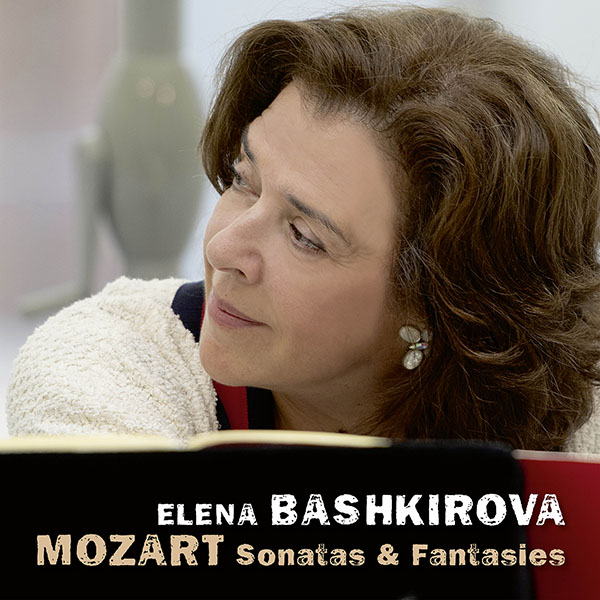
ELENA
BASHKIROVA,
piano
MOZART
·
Sonatas
&
Fantasies
„I
adore
playing
Mozart“
“Interesting
as they
are
from a
historical
perspective,
the Six
Variations
on the
Final
Theme
of
Mozart’s
Clarinet
Quintet
were
not
written
by
Mozart
himself,
but by
an
anonymous
composer
ten
years
after
his
death;
this
was
kept
secret
for a
long
time,
probably
for
expedient
commercial
reasons.
The
lyrical
fifth
variation
stands
out
among
the
others:
Bashkirova
interprets
it as
if she
were
evoking
a child
sitting
wide-eyed
at the
piano,
playing,
and
drifting
into
entirely
distant
worlds.
In
contrast,
the
pearly
runs in
the
Piano
Sonata
in B
Flat
Major,
K. 333,
are
full of
substance.
In the
final
movement,
Mozart
is said
to have
intended
to
imitate
the
full
texture
of a
large-scale
piano
concerto
with
its own
cadenza.
That is
not
necessarily
what
one
hears
in
Bashkirova’s
version,
but her
playing
exhibits
truly
Apollonian
clarity
and
serenity.”
(Udo
Badelt,
Tagesspiegel/Berlin,
24 Jan
2019)
Release
date 18
November
2022 | |
|
|
|
|
|
|
|
|
|
|
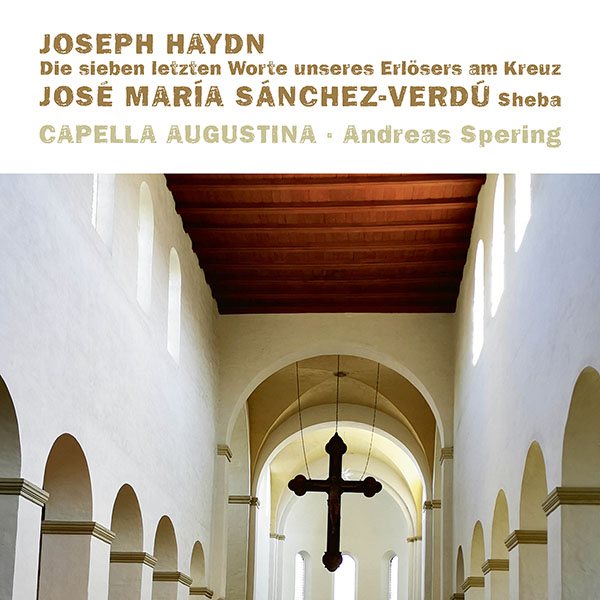
CAPELLA
AUGUSTINA
·
ANDREAS
SPERING,
Dirigent
HAYDN ·
SÁNCHEZ-VERDÚ
HAYDN
and . .
.
“This
recording
is the
result
of a
project
launched
a few
years
ago by
the
Brühl
Castle
Concerts
series
(Brühler
Schlosskonzerte)
and
Capella
Augustina
within
the
framework
of the
Haydn
Festival,
which
they
organize.
In
2018,
we
commissioned
a piece
from
Spanish
composer
José
Maria
Sánchez-Verdú,
one of
whose
works I
had the
privilege
of
premiering
a while
back: a
mesmerizing,
fantastically
well-orchestrated
work.
Born in
Andalusia,
Sánchez-Verdú
chose
to
enact a
new
musical
encounter
with
Haydn’s
work
Die
sieben
letzten
Worte
unseres
Erlösers
am
Kreuze
(“The
Seven
Last
Words
of Our
Savior
on the
Cross”).
. .
Sánchez-Verdú
has
written
Sheba
(the
Hebrew
word
for
“seven”)
as a
series
of
interludes
to be
inserted
between
the
movements
of
Haydn’s
original
work.
Each of
Haydn’s
seven
“sonatas”
is
followed
by a
2-to-3-minute
movement
that
serves
as a
commentary,
an
exegesis,
a
prolongation,
or an
antithesis
to what
has
been
previously
heard .
. .“
(Excerpt
from
the
booklet
notes
by
Andreas
Spering)
Release
date
18
November
2022 | |
|
|
|
|
|
|
|
|
|
|
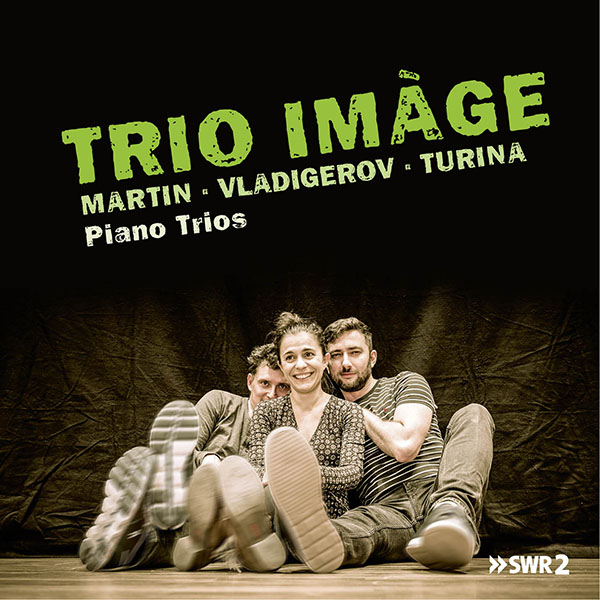
TRIO
IMÀGE
MARTIN
·
VLADIGEROV
·
TURINA
· Piano
Trios
Pan-European
Sonorities
"For
this
CD, we
have
decided
to
record
three
works
written
between
1916
and
1926.
In that
period
marked
by the
First
World
War and
its
aftermath,
it is
remarkable
to note
these
three
composers’
widely
varying
creative
approaches
and
ideas.
Composed
during
a
summer
stay at
the
French
seaside
resort
of
Capbreton,
Frank
Martin’s
piano
trio
has
accompanied
us on
our
journey
as an
ensemble
ever
since
we were
students.
....
Two
of us –
Gergana
and
Pavlin
– have
been
familiar
with
the
music
of
Pancho
Vladigerov
ever
since
early
childhood.
His
sole
piano
trio, a
monumental
work in
A
Minor,
captivates
us with
its
original
melodies
and
harmonies.
Although
Vladigerov
finished
writing
it
during
his
studies
in
Berlin,
we also
find
that it
has
unmistakable
traces
of
Bulgarian
folklore.
..
Joaquin
Turina’s
frequently
performed
Second
Piano
Trio is
a work
we
discovered
somewhat
by
chance
in
2011.
After
only
one
rehearsal
we were
already
fascinated
with
this
colorful,
highly
emotional
composition
that
presents
Spanish
harmonies
and
rhythms
in a
thoroughly
authentic
way..."
(Forword
of Trio
Imàge)
Release
date
04
November
2022 | |
|
|
|
|
|
|
|
|
|
|
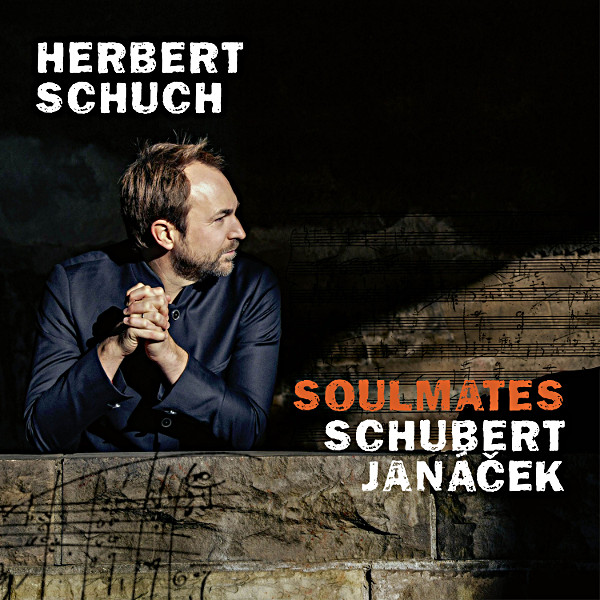
HERBERT
SCHUCH,
piano
SCHUBERT
&
JANÁČEK
SOULMATES
"The
idea of
finding
relationships
between
the
music
of
Franz
Schubert
and
Leoš
Janáček
emerged
in my
head
for the
first
time in
a kind
of
dreamworld
between
sleep
and
waking
. . .
Each
one of
them is
a
composer
who
discovers
and
creates
his own
world
of
sound
step by
step,
by
groping
or
wandering.
Schubert
embarks
on his
journey
with a
certain
degree
of
open-mindedness:
I get
the
impression
that he
is not
so
certain
about
where
his
destination
lies or
which
path he
will
take to
reach
it.
This
feeling
of
departure,
of
improvisation,
of
setting
one
foot
after
the
other,
is
something
I also
sense
quite
intensely
in
Janáček.
In
these
two
composers,
there
is a
special
relationship
between
the
outer
world
and
inner
world:
their
music
is
clearly
connected
with
nature,
but
nature
is only
a
mirror
of
their
inner
emotions.
I
find it
exciting
to
juxtapose
these
two
artists
– these
two
human
beings,
I would
say –
and see
what
happens
if we
let
them
share a
portion
of
their
journey
in each
other’s
company.”
(Excerpt
from an
interview
with
Michael
Kube)
Release
date 21 October
2022 | |
|
|
|
|
|
|
|
|
|
|
KILIAN
HEROLD,
clarinet
&
HANSJACOB
STAEMMLER,
piano
BRAHMS
· BERG
·
KORNAUTH
·
KORNGOLD
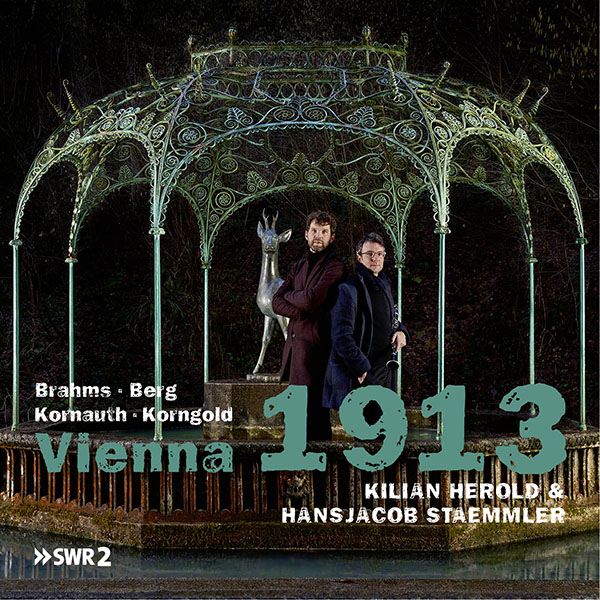
VIENNA
1913
"The
years
1900-1914
were
perhaps
the
most
thrilling
period
in
European
music
history:
the
cradle
of what
we now
call
musical
Modernism.
This
was the
time
when
the
great
“avant-garde
schools”
took
shape:
in
Paris,
Berlin,
Saint
Petersburg,
and
particularly
in
Vienna.
...
Our
programme
selection
for
this CD
focuses
on two
works
written
in
Vienna
in 1913
– the
“summer
of the
century”,
as
author
Florian
Illies
calls a
pivotal
year
that
put an
end to
the
long
19th
century
and
introduced
the
somber
20th
century.
The
two
works
are
Alban
Berg’s
Four
Pieces
for
Clarinet
and
Piano
op. 5
and
Egon
Kornauth’s
Sonata
for
Clarinet
and
Piano.
1913
was the
year of
several
“scandalous”
premieres:
Schoenberg’s
Gurrelieder,
Berg’s
Altenberglieder,
Stravinsky’s
Rite of
Spring,
and
others
that
were
less
scandalous:
Debussy’s
Images
pour
Orchestre,
Max
Reger’s
Isle of
the
Dead,
Sibelius’s
Luonnotar,
de
Falla’s
La vida
breve,
and
Richard
Strauss‘s
Festliches
Präludium.
.."
(Excerpt
from
the
liner
notes
by
Ludwig
Holtmeier)
Release
date 21 October
2022 | |
|
|
|
|
|
|
|
|
|
|
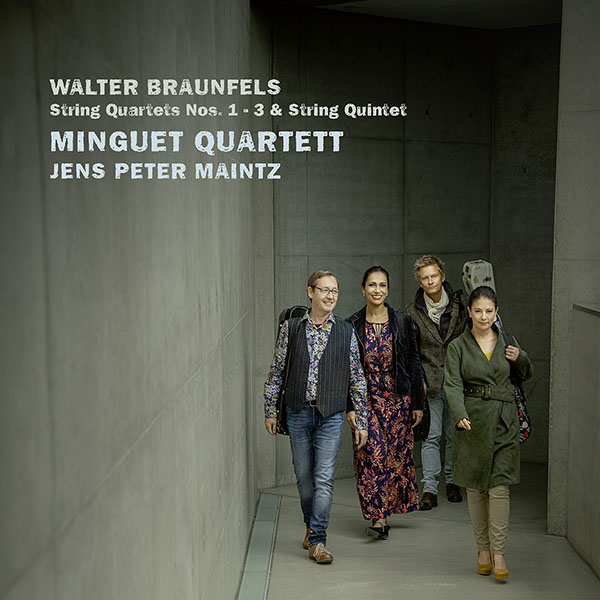
MINGUET
QUARTETT
& JENS
PETER
MAINTZ
WALTER
BRAUNFELS
·
String
Quartets
No. 1-3
&
String
Quintet
(2 CDs)
Complete
Recording
of
Braunfels’
String
Chamber
Music
“Analysis
obviously cannot seize the
essence. […] If my music has
meaning, it does not lie in the
musical material itself, but
beneath it: in the artistic
approach and its relationship with
my world view.” (Walter
Braunfels).
With the
complete recording of Walter
Braunfels’s chamber music for
strings, the Cologne-based Minguet
Quartet has chosen to pay
reverence to a figure who played a
decisive role in the upbringing
and artistic trajectory of a great
number of musicians in Cologne
during the period between the two
world wars.
Already
widely respected and hailed as a
composer and as a pianist,
Braunfels responded to the Culture
Ministry’s initiative in 1925 and
founded the Second Prussian
Conservatory.
He served in
that institution as president and
music professor until 1933, when
he was dismissed from all posts,
regardless of his merits, because
he was half Jewish. Devastated by
this unfair ostracism, Braunfels
moved to the town of Überlingen on
the Lake of Constance and went
into what is now termed “inner
emigration. . .”
Cologne is the city where the
Minguet Quartet is based, along
with the CAvi-music label and the
Deutschlandfunk broadcasting
headquarters: it seemed quite
natural and timely to create a
lasting document – a complete
recording – as a homage to the
legacy of a composer and teacher
who meant so much for the city in
the 1925-1933 period, but who had
to face so much suffering and
rejection thereafter…..
(Excerpt from the booklet notes by
Ute Jung-Kaiser)
Release
date 05
August
2022
| |
|
|
|
|
|
|
|
|
|
|
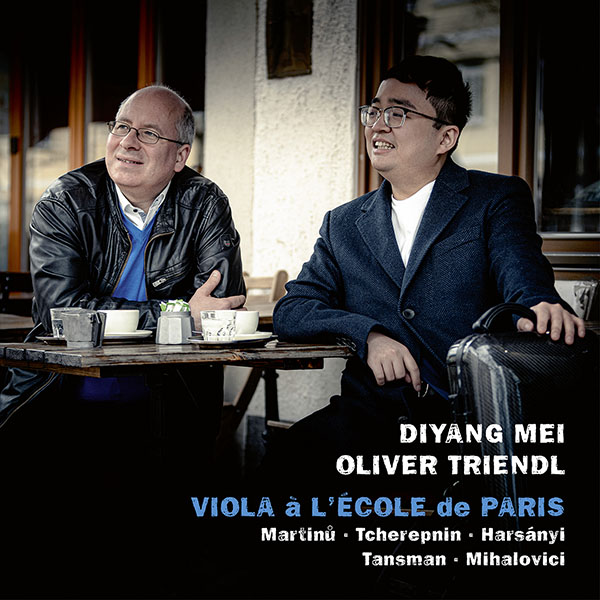
DIYANG
MEI,
viola &
OLIVER
TRIENDL,
piano
VIOLA à
l’ÉCOLE
de
PARIS
In the
wake of
World
War I
and the
October
Revolution,
countless
artists
emigrated
from
Eastern
Europe
to
Paris –
particularly
a
number
of
Russians.
They
were
able to
build a
reputation
by
virtue
of keen
public
interest
in
their
art,
and
sometimes
thanks
to
savvy
networking
and
helpful
contacts.
This
was the
case of
Alexander
Tcherepnin,
whose
father,
a
respected
composer
and
conductor,
had
reaped
great
success
in the
first
season
of the
legendary
Ballets
Russes
in
1909.
Alexander
Tcherepnin
was
soon
welcomed
and
adopted
by
groups
of
artists
such as
the
École
de
Paris,
a loose
gathering
of
emigrants
from
several
countries
that
included
Bohuslav
Martinů
and
Romanian
composer
Marcel
Mihalovici
(see
below).
Alexander
Tcherepnin’s
two
brief
pieces
featured
here,
Romance
(1922)
and
Elegy
(1929),
can
only
offer a
glimpse
of this
widely
traveled
composer’s
cosmopolitan
output:
he was
a man
constantly
in
search
of new
ideas.
Tcherepnin
could
switch
from
one
musical
genre
to
another
in an
instant;
he
eventually
even
incorporated
influences
from
the Far
East.
Although
the
Romance
is
still
entirely
under
the
spell
of Late
Romanticism,
the
Elegy
is
already
quasi-Modernist
in tone
– a
work
revealing
a
heightened
sensitivity
for
timbre,
as we
can
hear,
for
instance,
in its
iridescent
violin
flageolets.
Approximately
the
same
age as
Tcherepnin
and
successful,
like
his
colleague,
as a
pianist,
Tibor
Harsányi
arrived
in
Paris
via the
Netherlands
in
1923.…..
(Excerpt
from
the
liner
notes
by
Johannes
Jansen).
Release
date 05
August
2022 | |
|
|
|
|
|
|
|
|
|
|
|
|
|
|
|
|
|
CAvi-music on Facebook
FACEBOOK
CAVI MUSIC
|
|
 |
|
|
| |
|
|
|
|


