|
|
 |

SUBSCRIBE TO OUR
YOUTUBE CHANNEL 
|
|
|
 |
|
|
|
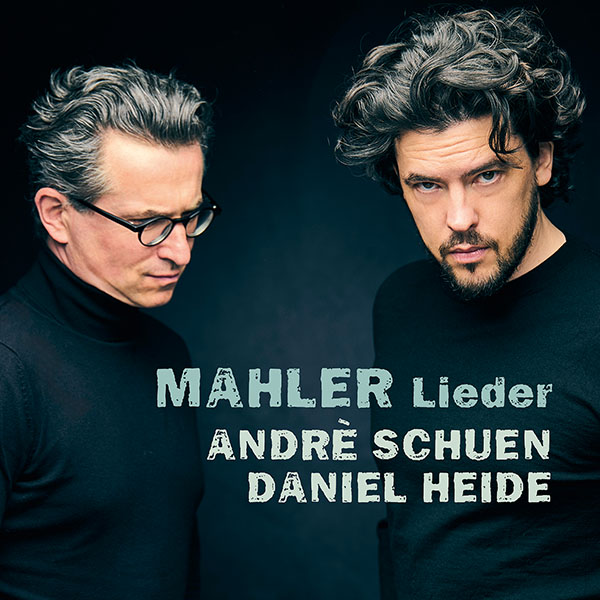
ANDRÈ SCHUEN, baritone & DANIEL HEIDE , piano
MAHLER · LIEDER /SONGS
Certain kinds of music
give us answers. Others dare to
leave questions open.
In my view, the songs of
Gustav Mahler belong in the second
category. Every time I get to sing
these songs, I discover a
different person within them –
sometimes a young soul in search
of something, sometimes a lover,
sometimes the desperate one, or
someone who has learnt not to
fight pain any longer, but to face
it head-on.
Gustav Mahler’s songs are
about everything. About the
individual, but at the same time
about the whole. About humanity,
but also about the divine.
Ever since the day I first
sang the Songs of a Wayfarer more
than ten years ago, they have
become a cherished part of my
artistic journey. A journey
through longing, loss, memory and
solace. A path in which the outer
surface turns increasingly
inwards...
This recording
is not merely a document of a
studio rendition, but the result
of a long journey we have
undertaken together. Over many
years, Daniel Heide and I have
never ceased to rediscover these
songs, modifying our approaches
and interpretations, questioning
them and allowing them to evolve.
...
So too has every experience
outside the realm of music.
Perhaps this is the best way to
engage with Mahler: not as
something we understand once and
for all, but as a lifelong
conversation partner.
(Excerpt
from the line notes, by André
Schuen)
RELEASE
09
OCTOBER
2026 | |
|
|
|
|
|
|
|
|
|
|
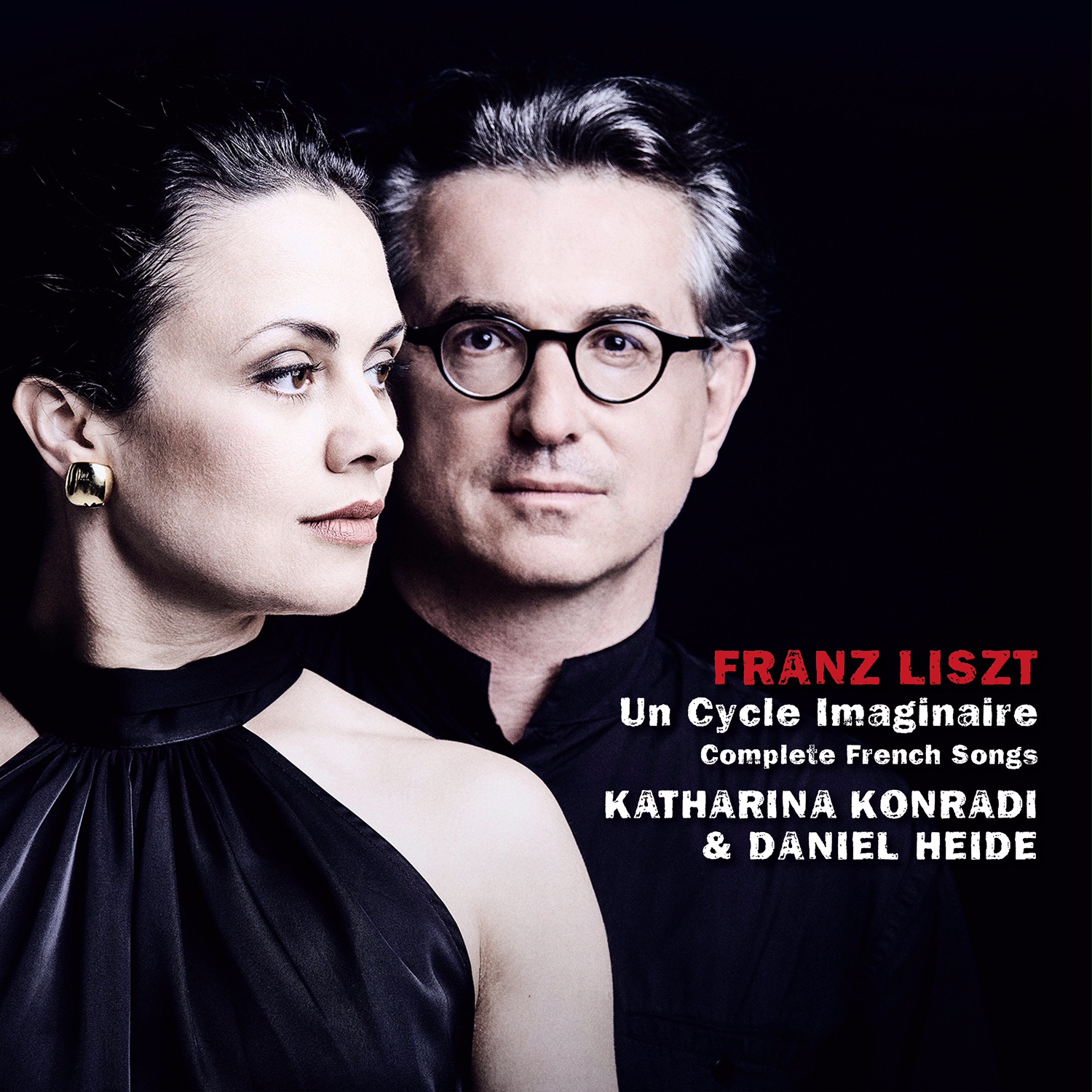
KATHARINA KONRADI, soprano & DANIEL HEIDE , piano
FRANZ LISZT · Un Cycle Imaginaire

OUR WARMEST
CONGRATULATIONS ON WINNING THE OPUS
KLASSIK 2026
IN THE
CATEGORY ' Solo Singing of the
Year'
BUY THE DIGITAL RELEASE
BUY THE CD
JPC AMAZON
| |
|
|
|
|
|
|
|
|
|
|
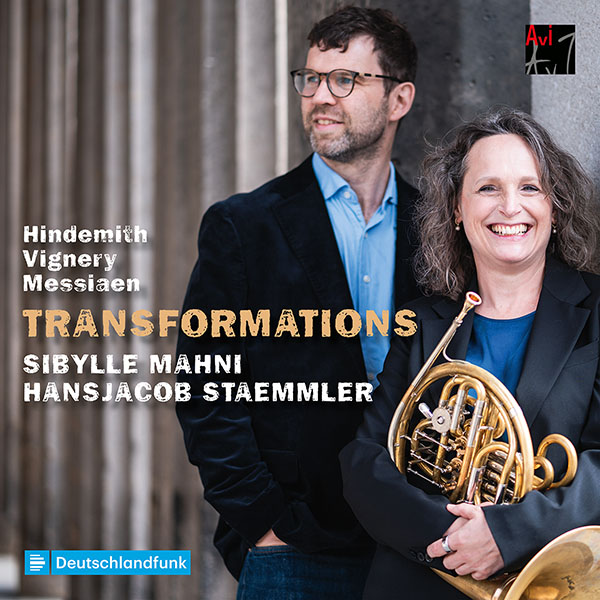
SIBYLLE MAHNI, horn & HANSJACOB STAEMMLER, piano
TRANSFORMATIONS ·
Hindemith · Vignery · Messiaens
Sibylle
Mahni:
For me, the
period in which these three
sonatas were composed plays a
central role. That is also the
reason why I had the idea of
bringing this combination of works
together on a single CD.
In Jane
Vignery’s sonata in particular, I
hear so much of the grief, despair
and, ultimately, helplessness
inevitably triggered by the
terrible events of the Second
World War in Europe.
That period was
certainly one of the greatest
times of transformation in
history. Fortunately,
transformation was achieved;
otherwise, Europe would probably
have become something quite
different from what we know today…
and, on the whole, I still like
what it has become!
.......
Hansjacob Staemmler:
Most of
all, it makes me think of a
somewhat whimsical, incidental
detail from Hindemith’s alto horn
sonata: a short poem – of his own
pen – which appears between the
intermezzo-like third movement and
the frenetic fourth movement and
is meant to be recited: “Das
Posthorn”.
Several
lines in the poem can offer food
for thought. Images associated
with the horn (the horn as a
hunting instrument and the
historical post horn as a signal
of arrival) lead us to reflect on
the consequences of technological
transformation through the ages.......The
fourth movement puts this insight
into practice: the hectic piano
playing represents “the new”,
whereas the horn part symbolises
“the old”.
Hindemith’s poem
exudes a certain nostalgia, a
longing for “the good old days”.
Nostalgia is often a by-product of
transformation.
(Excerpt from
the liner notes of the soloists)
DIGITAL
RELEASE
26 JUNE
2026 | |
|
|
|
|
|
|
|
|
|
|
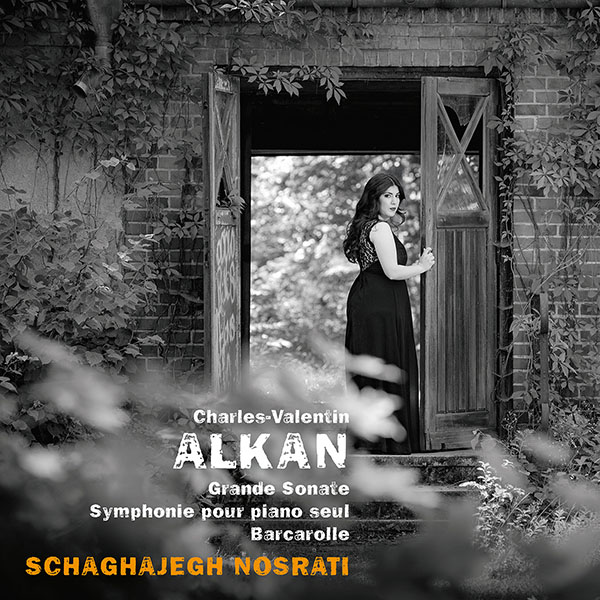
SCHAGHAJEGH NOSRATI , piano
CHARLES-VALENTIN ALKAN · Grande Sonate · Symphonie pour Piano Seul · Barcarolle
CHARLES-VALENTIN ALKAN - a
stunning outsider
"For 20 years, I have been
studying the music of
Charles-Valentin Alkan, and I
continue to feel a strong
connection to this composer.
After numerous public performances
of his Grande Sonate ‘Les Quatre
Âges’ and the Symphonie pour piano
seul, the time now seemed ripe to
record those two works, along with
the enchanting Barcarolle Op. 65
No. 6, which is an example of
Alkan‘s talent not only for
large-scale works but also for
musical miniatures.....
Fortunately, Alkan is gradually
enjoying greater popularity than
he did two decades ago, at least
among performers and lovers of
Romantic piano music.
Nevertheless, his works rarely
appear on concert programmes,
which is truly regrettable, as
this music speaks to audiences so
directly and vividly, especially
when performed live. Alkan
published the Grande Sonate in
1847 and dedicated it to his
father.
At first glance, it appears
to
be a homage to the sonata genre we
know so well from the Viennese
Classical tradition, but on closer
inspection, it proves to be highly
experimental and innovative.......
The Symphonie pour piano seul
was published in 1857 as part of
Twelve Studies in all minor keys
(Douze études dans tous les tons
mineurs). Although it is embedded
in a cycle of etudes, the
Symphonie is clearly designated as
such and is therefore usually
performed as a separate work in
four movements. Similar to the
Grande Sonate, the individual
movements are in different
keys......."
(excerpts from the
liner notes by Schaghajegh
Nosrati)
CD
RELEASE
/
DIGITAL
RELEASE
24
APRIL
2026 | |
|
|
|
|
|
|
|
|
|
|
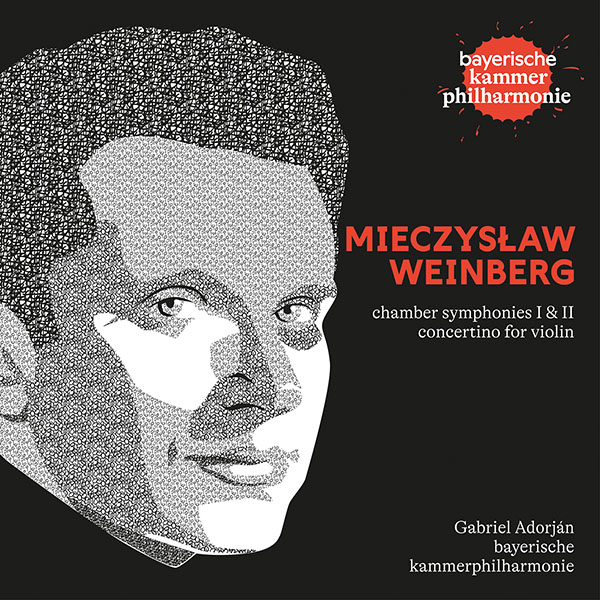
GABRIEL ADORJÁN, soloist and leader · bayerische kammerphilharmomie
MIECZYSŁAW WEINBERG · chamber symphonies I & II, concertino for violin
A companion and
friend of Dmitri Shostakovich
1919-1996
"The unique magic of
Mieczysław Weinberg’s music is not
easy to describe. Closely
interwoven with his biography,
which bore the painful marks of
the upheavals of the 20th century,
his compositions emerged as a
musical reflection of his life.
And yet, they resist clear-cut
interpretations: Weinberg’s music
is too complex and ambiguous, as
technically demanding as it is
fascinating. At times,
contradictions become audible—for
instance, when Weinberg, in his
darkest hours, finds a musical
language that expresses lightness
and joy.
Such is the case in his
Concertino Op. 42, composed in the
summer of 1948, when the
ever-growing antisemitism of the
Stalinist regime, clearly palpable
since the end of the war, began to
affect Weinberg’s life directly.
At the same time, in the spring of
1948, the music scene came under
the grip of government censorship
as part of a propaganda campaign.
At its center stood Weinberg’s
close friend Dmitri
Shostakovich...
In March 1948, in an attempt
to deflect suspicion, Weinberg
wrote one of the obligatory and
painful self-denunciations,
acknowledging his “mistakes” and
pledging to adapt his style to
official expectations. As if to
underscore these statements, he
composed his Sinfonietta No. 1 Op.
41 around the same time—a work
that stands out in Weinberg’s
oeuvre for its straightforwardness
and simplicity.
Yet only a few months later,
in June 1948, Weinberg composed
the Concertino, Op. 42. Unlike the
Sinfonietta, however, this
composition can by no means be
called a strategic work of
political calculation....."
(Excerpt from the liner notes by
Verena Mogl)
BUY THIS RELEASE
CD
RELEASE
/
DIGITAL
RELEASE
20
MARCH
2026 | |
|
|
|
|
|
|
|
|
|
|
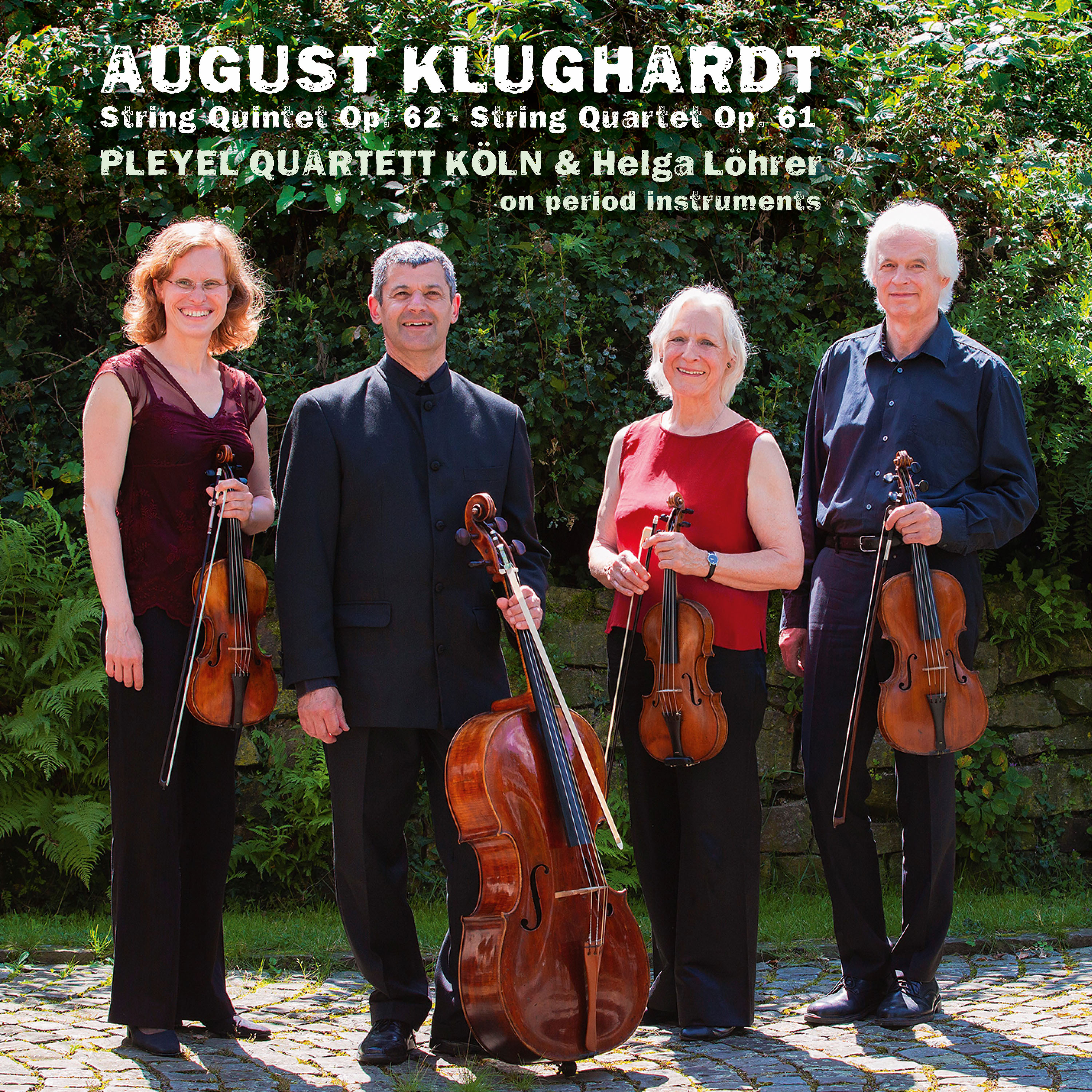
PLEYEL QUARTETT KÖLN & HELGA LÖHRER, cello
(on period instruments)
AUGUST
KLUGHARDT · String quintet op. 62 ·
String quartet op. 61
A
Friend of the late Romantic Period
Born on 30th
November 1847 in Köthen, August
Klughardt’s love of music was
instilled early on through his
father, a viola player. According
to Klughardt’s biographer Leopold
Gerlach Gottfried Klughardt was a
keen and able amateur in a
“Privatkapelle” enhanced by
members of Köthen‘s Court
Orchestra.
It comes
therefore as a surprise to learn
that young August only started
regular piano lessons from the age
of ten.
Following the
family’s move to the residency
town of Dessau in 1863 which had
developed into a city of musical
reknown thanks to the good offices
of Friedrich Schneider (1786 –
1853), Klughardt’s musical
development took on a steeper
trajectory. Taught by the best
musicians the city had to offer,
both in music theory and practice,
the foundations were laid for a
broad spectrum of musical
activity.
Performing on
the piano, composing and
conducting played equal parts in
his musical personality from his
final days at school continuing
throughout his life. . .
However,
few had the honour. Yet August
Klughardt was one of the lucky
ones. Joachim’s avoidance of
favouritism is shown by the
example of Max Bruch, a friend of
his, yet whose works were not
among those chosen.
(Excerpt
from the line notes by Andreas
Gerhardus)
DIGITAL
RELEASE
ONLY
13 FEBRUARY
2026 | |
|
|
|
|
|
|
|
|
|
|
|
|
|
|
|
|
|
|
|
|
|
CAvi-music on Facebook
FACEBOOK
CAVI MUSIC
|
|
 |
|
|
| |
|
|
|
|


